
You’re probably thinking about starting a plant-based diet but you don’t know how to go about this. Don’t worry, you’re in the right place as you’ll learn what it entails and how to make the change easy and enjoyable.
What Is a Plant-Based Diet?
There is no clear definition of what constitutes a plant-based diet. The whole concept is more of a lifestyle than a diet. This is because plant-based diets can vary greatly depending on the extent to which a person includes animal products in their diet.
Nonetheless, the basic principles of a plant-based diet are as follows:
- Emphasizes whole, minimally processed foods
- Limits or avoids animal products
- Focuses on plants, including vegetables, fruits, whole grains, legumes, seeds and nuts, which should make up the majority of what you eat
- Excludes refined foods, like added sugars, white flour and processed oils
- Pays special attention to food quality, with many proponents of the plant-based diet promoting locally sourced, organic food whenever possible
For these reasons, this diet is often confused with vegan or vegetarian diets. Yet although similar in some ways, these diets are not the same.
People who follow vegan diets abstain from consuming any animal products, including dairy, meat, poultry, seafood, eggs and honey. Vegetarians exclude all meat and poultry from their diets, but some vegetarians eat eggs, seafood or dairy.
Plant-based diet, on the other hand, is more flexible. Those in the plant-based tribe eat mostly plants, but animal products aren’t off limits.
While one person following a plant-based diet may eat no animal products, another may eat small amounts of eggs, poultry, seafood, meat or dairy.
Health Benefits of a Plant-Based Diet
One of the most powerful steps you can take to improve your health, boost energy levels, and prevent chronic diseases is to move to a plant-based diet. There’s excellent scientific evidence that many chronic diseases can be prevented, controlled, or even reversed with a plant-based diet.
Studies reveal that a plant-based diet can reduce the risk of type-2 diabetes, heart disease, certain types of cancer, and other major illnesses. Many people also report bigger fitness payoffs, more energy, reduced inflammation, and better health outcomes after making the switch.
Heart Disease
One of the most well-known benefits of plant-based diets is that they are healthy for the heart, but the quality and types of foods included in the diet matter.
It was discovered that people who followed a healthy plant-based diet rich in vegetables, fruits, whole-grains, legumes and nuts had a significantly lower risk of developing heart disease than those following non-plant-based diets.
However, unhealthy plant-based diets that included sugary drinks, fruit juices, and refined grains were associated with a slightly increased risk of heart disease.
Consuming the right kinds of food is critical for heart disease prevention when following a plant-based diet, which is why adhering to this diet is the right choice.
Cancer
Research suggests that following a plant-based diet may reduce your risk of certain types of cancer.
A study found that vegetarian diets were associated with a significantly lower risk of gastrointestinal cancer, especially for those who followed a lacto-ovo vegetarian diet (vegetarians who eat eggs and dairy).
Another study reveals that those who followed vegetarian diets had a 22% lower risk of developing colorectal cancer than non-vegetarians.
Pescatarians (vegetarians who eat fish) had the greatest protection from colorectal cancer with a 43% reduced risk compared to non-vegetarians.
Cognitive Decline
Some studies suggest that diets rich in vegetables and fruits may help slow or prevent cognitive decline and Alzheimer’s disease in older adults.
Plant-based diets have a higher number of plant compounds and antioxidants, which have been shown to slow the progression of Alzheimer’s disease and reverse cognitive deficits.
In many studies, higher intakes of fruits and vegetables have been strongly associated with a reduction in cognitive decline.
Diabetes
Adopting a plant-based diet may be an effective tool in managing and reducing your risk of developing diabetes.
A study found that those who adhered to a healthy plant-based eating pattern had a 34% lower risk of developing diabetes than those who followed unhealthy, non-plant-based diets.
Another study demonstrated that plant-based diets (vegan and lacto-ovo vegetarian) were associated with nearly a 50% reduction in the risk of type 2 diabetes compared to non-vegetarian diets.
Plus, plant-based diets have been shown to improve blood sugar control in people with diabetes.
Foods to Eat on a Plant-Based Diet
From eggs and bacon for breakfast to steak for dinner, animal products are the focus of most meals for many people.
When switching to a plant-based diet, meals should center on plant-based foods.
If animal foods are eaten, they should be eaten in smaller quantities, with attention paid to the quality of the item.
Foods like dairy, eggs, poultry, meat, and seafood should be used more as a complement to a plant-based meal, not as the main focal point.
A Plant-Based Shopping List
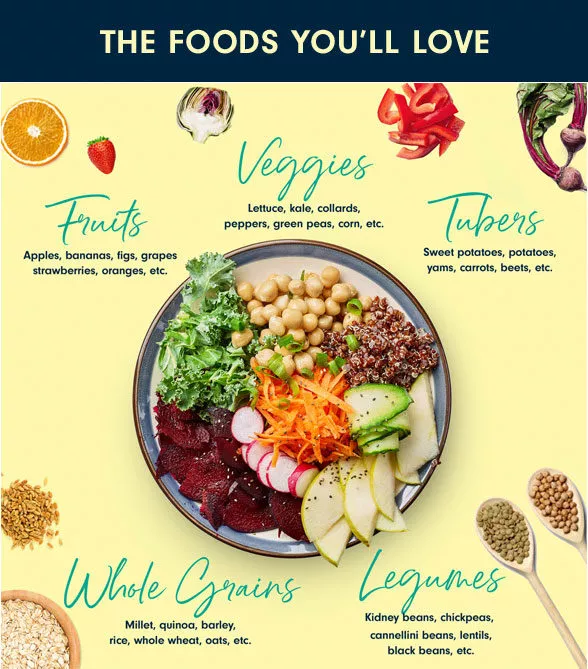
- Fruits: Berries, citrus fruits, pears, peaches, pineapple, bananas, etc.
- Vegetables: Kale, spinach, tomatoes, broccoli, cauliflower, carrots, asparagus, peppers, etc.
- Starchy vegetables: Potatoes, sweet potatoes, butternut squash, etc.
- Whole grains: Brown rice, rolled oats, farro, quinoa, brown rice pasta, barley, etc.
- Healthy fats: Avocados, olive oil, unsweetened coconut, etc.
- Legumes: Peas, chickpeas, lentils, peanuts, black beans, etc.
- Seeds, nuts and nut butters: Almonds, cashews, macadamia nuts, pumpkin seeds, sunflower seeds, natural peanut butter, tahini, etc.
- Unsweetened plant-based milks: Coconut milk, almond milk, cashew milk, etc.
- Spices, herbs and seasonings: Basil, rosemary, turmeric, curry, black pepper, salt, etc.
- Condiments: Salsa, mustard, nutritional yeast, soy sauce, vinegar, lemon juice, etc.
- Plant-based protein: Tofu, tempeh, plant-based protein sources or powders with no added sugar or artificial ingredients.
- Beverages: Coffee, tea, sparkling water, etc.
If supplementing your plant-based diet with animal products, choose quality plant-based ingredients from grocery stores or, better yet, purchase them from local farms.
- Eggs: Pasture-raised when possible
- Poultry: Free-range, organic when possible
- Beef and pork: Pastured or grass-fed when possible
- Seafood: Wild-caught from sustainable fisheries when possible
- Dairy: Organic dairy products from pasture-raised animals whenever possible
7 Days Sample Menu for a Plant Based Diet
Transitioning to a plant-based diet doesn’t have to be challenging.
Our 7 days menu can help set you up for success. It includes a small number of animal products, but the extent to which you include animal foods in your diet is up to you.
Monday
- Breakfast: Oatmeal made with coconut milk topped with berries, coconut and walnuts.
- Lunch: Large salad topped with fresh vegetables, chickpeas, avocado, pumpkin seeds and goat cheese.
- Dinner: Butternut squash curry.
Tuesday
- Breakfast: Full-fat plain yogurt topped with sliced strawberries, unsweetened coconut and pumpkin seeds.
- Lunch: Meatless chili.
- Dinner: Sweet potato and black bean tacos.
Wednesday
- Breakfast: A smoothie made with unsweetened coconut milk, berries, peanut butter and unsweetened plant-based protein powder.
- Lunch: Hummus and veggie wrap.
- Dinner: Zucchini noodles tossed in pesto with chicken meatballs.
Thursday
- Breakfast: Savory oatmeal with avocado, salsa and black beans.
- Lunch: Quinoa, veggie and feta salad.
- Dinner: Grilled fish with roasted sweet potatoes and broccoli.
Friday
- Breakfast: Tofu and vegetable frittata.
- Lunch: Large salad topped with grilled shrimp.
- Dinner: Roasted portobello fajitas.
Saturday
- Breakfast: Blackberry, kale, cashew butter and coconut protein smoothie.
- Lunch: Vegetable, avocado and brown rice sushi with a seaweed salad.
- Dinner: Eggplant lasagna made with cheese and a large green salad.
Sunday
- Breakfast: Vegetable omelet made with eggs.
- Lunch: Roasted vegetable and tahini quinoa bowl.
- Dinner: Black bean burgers served on a large salad with sliced avocado.
As you can see, the idea of a plant-based diet is to use animal products sparingly.
However, many people following plant-based diets eat more or fewer animal products depending on their specific dietary needs and preferences.
Conclusion
Think of a plant-based diet as a guide that encourages more whole plant foods, instead of as a restrictive diet that makes all animal foods off-limits.
It’s a fresh, flavorful approach to eating and has been shown to have significant health benefits, including weight loss and disease prevention.
Transitioning to a more plant-based diet is an excellent choice not just for you, but for the planet as well. It’s worth giving it a try!
